Pads, Products
The Science of Dryness: Why Zero-Transfer Technology is the New Standard in Period Care
For decades, the standard for a “good” sanitary pad was simply its ability to prevent a leak from reaching your clothes. If you made it through the day without a visible stain, the product was considered a success. But for the person wearing the pad, the bar has always been much higher.
We’ve all experienced that universal, uncomfortable sensation: the “wet sponge” effect. It’s that damp, heavy feeling that often sets in within an hour of putting on a fresh pad. It makes you feel self-conscious when you sit down, hesitant when you stand up, and perpetually aware of your period.
The truth is, traditional period care has a significant flaw. It focuses on absorption—getting the liquid inside the pad—but it fails at retention—keeping that liquid locked away when the pad is subjected to the pressure of your body.
At Dadacare Plus, we believe that true period comfort isn’t just about how much a pad can hold; it’s about how dry it keeps your skin. This is the era of Zero-Transfer Technology, and it is changing the way women experience their cycles.
The Science of the Core: Absorption vs. Locking
To understand why some pads feel wet while others stay dry, we have to look under the hood—or rather, inside the layers. Not all absorbent materials are created equal.
Surface Wicking: The First Line of Defense
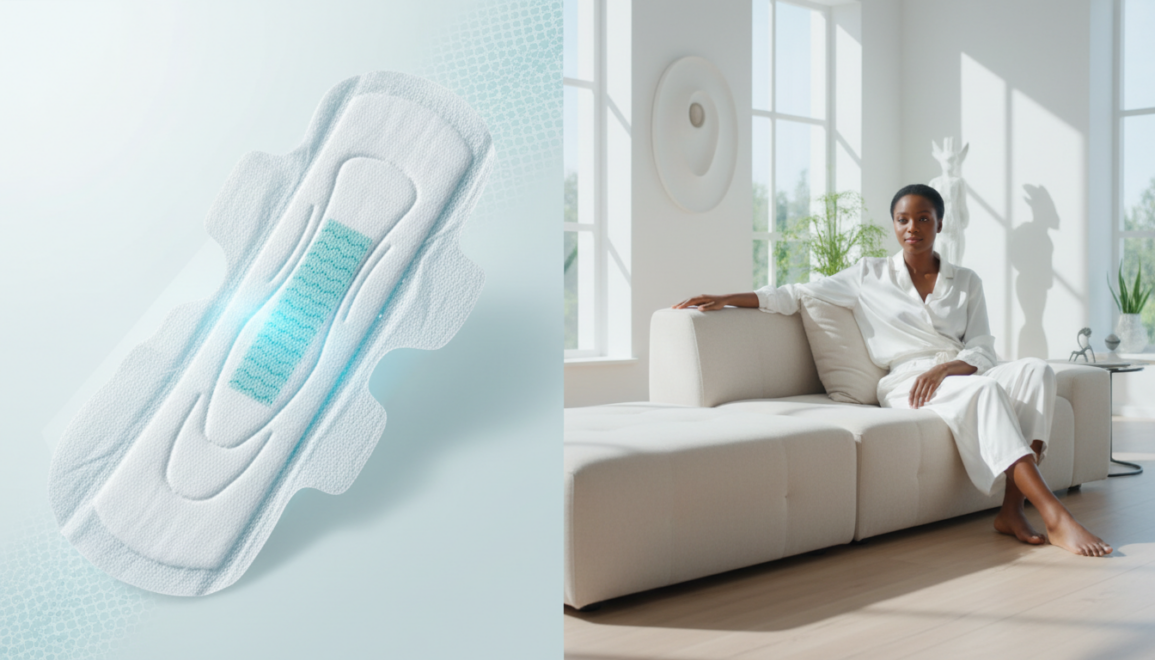
The journey of moisture begins at the top layer. A high-quality pad should act like a one-way valve. Dadacare Plus utilizes an advanced “stay-dry” top sheet designed with micro-pores that instantly wick moisture away from the body.
Unlike traditional cotton tops that can hold onto moisture and stay damp against your skin, our specialized mesh-feel surface ensures that the liquid passes through to the core in seconds. This initial “wicking” is what prevents that immediate “gush” sensation from turning into a lingering dampness.
Core Retention: Why Most Pads Fail
This is where the real science happens. Most traditional pads rely heavily on fluff pulp (essentially ground-up paper). While pulp is great at soaking up liquid, it acts exactly like a kitchen sponge. If you soak a sponge and then press your hand down on it, the water squeezes right back out to the surface. In the world of period care, this is called “re-wet” or “transfer.”
Dadacare Plus replaces or reinforces traditional pulp with Super Absorbent Polymers (SAP). SAP are tiny beads that can absorb hundreds of times their weight in liquid. More importantly, they don’t just “hold” the liquid; they undergo a chemical reaction that turns the liquid into a stable, solid gel. Once that liquid is turned into a gel, it is physically impossible to squeeze it back out to the surface, no matter how much pressure you apply.
The 10x Weight Rule
Because our technology is so efficient, we don’t need the bulk. Traditional “maxi” pads use inches of padding to try and trap liquid, resulting in a “diaper-like” feel. Dadacare’s ultra-absorbent core allows for an incredibly thin profile that can hold significantly more than its own weight. You get the protection of a heavy-duty pad with the discretion of a liner.
The Showdown: The “Paper Towel” Press Test
Marketing claims are one thing, but visual proof is another. At Dadacare Plus, we use the “Paper Towel” Press Test to demonstrate the physical difference between our Zero-Transfer Technology and the industry standard.
Simulating Real-Life Movement
A static test—where you just pour liquid on a pad and look at it—isn’t enough. In real life, you aren’t a statue. You sit down at your desk, you walk to your car, you cross your legs during a meeting, and you toss and turn in your sleep. All of these movements apply pressure to the pad.
“The Press” is the ultimate test of a pad’s integrity. It simulates what happens when your body weight meets the absorbent core.
Step-by-Step: Dadacare vs. The Industry Standard
If you were to perform this test at home, here is what you would see:
- Phase 1: The Pour. We take a Dadacare Plus pad and a leading competitor’s “Ultra-Thin” pad. We pour equal amounts of blue saline liquid (simulating menstrual flow) onto the center of both.
- Phase 2: The Wait. We give the technology 30 seconds to work. You’ll notice the liquid on the Dadacare pad disappears almost instantly, while it may linger on the surface of the competitor.
- Phase 3: The Press. This is the moment of truth. We take a clean, bone-white paper towel and place it over both pads. Then, we apply firm, even pressure—the same amount of pressure as someone sitting down in a chair.
The Visual Verdict
When the paper towel is lifted from the competitor pad, there is almost always a large, circular wet spot. This is the liquid that was “absorbed” but not “locked,” meaning it transferred back onto the paper towel (and would have transferred onto your skin).
When the paper towel is lifted from the Dadacare Plus pad, it is bone dry. There is no blue tint, no dampness, and no transfer. The liquid is trapped in the gel core, completely isolated from the surface.
Why “Zero Transfer” Matters for Your Body
The Paper Towel Press isn’t just a cool demo; it has real-world implications for your health and comfort.
Protecting Your Skin’s Micro-Environment
The skin in the perineal area is some of the most sensitive on your body. When this skin is subjected to prolonged dampness, the protective skin barrier begins to break down. This leads to:
- Period Rash: Also known as contact dermatitis, this is the redness and itching caused by moisture and friction.
- Chafing: Damp skin creates more friction against the pad, leading to painful “pad burns.”
- Infection Risks: A warm, damp environment is a breeding ground for bacteria and yeast.
By ensuring a dry surface, Dadacare Plus helps maintain your skin’s natural pH balance and prevents the irritation that many women assume is just a “normal” part of having a period.
Advanced Odor Control
Many people believe that menstrual odor is inevitable. However, the “period smell” is actually a result of menstrual blood being exposed to oxygen and bacteria on the surface of a pad.
Because Dadacare’s technology pulls the liquid deep into the core and turns it into a gel, it effectively seals the liquid away from the air. By locking the liquid down, we stop the oxidation process before it starts, providing natural, chemical-free odor control.
The Psychological Win: Confidence Without the “Check”
There is a mental load that comes with a heavy period. It’s the constant internal dialogue: “Do I feel wet? Did I just leak? Should I go to the bathroom and check?”
Zero-Transfer Technology eliminates the “sensory trigger” of your period. When you don’t feel the dampness, you aren’t constantly reminded of your flow. It allows you to go through your day with the confidence that you are dry, clean, and protected.
Choosing Your Level of Protection
While our technology remains consistent across our line, your needs change throughout your cycle.
Day vs. Night Requirements
During the day, movement is your biggest challenge. You need a pad that is flexible and stays dry during activity. Our Daytime Ultra-Thins focus on maximum breathability and a slim profile.
At night, gravity is the enemy. When you lie down, liquid tends to travel. Our Overnight Wings feature an elongated back and a wider core to ensure that even as you move in your sleep, the “Press Test” results remain the same: zero transfer, all night long.
Heavy Flow Solutions (Menorrhagia)
For those who suffer from heavy periods or menorrhagia, ultra-absorbent technology isn’t a luxury—it’s a necessity. If you find yourself changing a “standard” pad every two hours because it feels “full” or “heavy,” switching to a SAP-based core like Dadacare Plus can often double your wear time while significantly increasing your comfort.
Frequently Asked Questions (People Also Ask)
How can I stop my pad from feeling wet? The best way to stop that wet feeling is to choose a pad with “Zero-Transfer” or “Moisture-Lock” technology. Look for products that use Super Absorbent Polymers (SAP) rather than just cotton or pulp. These materials turn liquid into a gel, keeping the surface dry.
Why does my pad leak even when it isn’t full? This usually happens because the pad’s surface cannot absorb the liquid fast enough (side-leakage) or because the core is “saturated” but not “locked.” Under pressure, the liquid is squeezed out of the sides. Dadacare Plus solves this by wicking liquid instantly into a non-compressible gel.
Are ultra-absorbent pads safe for sensitive skin? Yes! In fact, they are often better for sensitive skin. Most “pad rashes” are caused by moisture sitting against the skin. By keeping the skin dry, ultra-absorbent pads reduce the risk of irritation and chafing.
What is the best pad for heavy flow and exercise? For active users, you need a pad that passes the “Press Test.” Look for an ultra-thin pad with high SAP content. This provides the security of a thick pad without the bulk, allowing for a full range of motion during exercise without the risk of “squeeze-back” leaks.
How often should I change an ultra-absorbent pad? Even though Dadacare Plus pads can hold a significant amount of liquid, we recommend changing your pad every 4 to 6 hours for optimal hygiene. However, you will notice that even at the 6-hour mark, the surface remains much drier than a traditional pad.
You Deserve to Stay Dry
For too long, women have been told that the discomfort, the dampness, and the “wet sponge” feeling of a period are just things we have to endure. But science tells a different story.
At Dadacare Plus, we’ve proven that you don’t have to settle for “absorbed” when you can have “locked away.” Our Paper Towel Press test isn’t just a demonstration—it’s our promise to you. It’s the proof that you can go through your heaviest day feeling as dry and comfortable as you did when you first got dressed this morning.
Stop settling for dampness. Stop the constant bathroom checks. Experience the “Zero-Transfer” difference for yourself and reclaim your confidence.
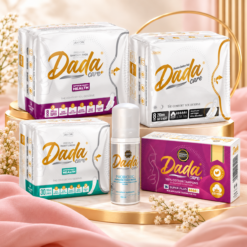
Shop the Dadacare Plus Collection and see the “Paper Towel” results with your own eyes.