Learn, Period Tips
How to Dispose of Sanitary Pads Properly in Kenya
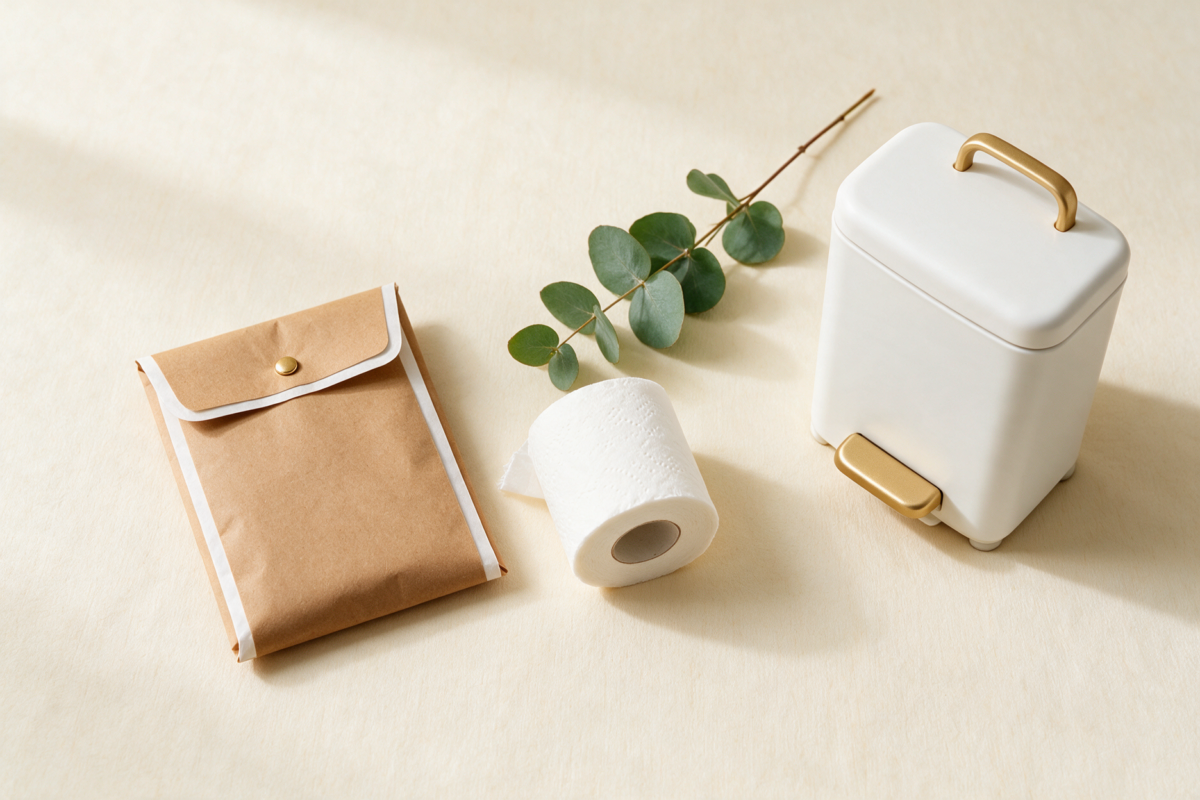
It’s one of those things nobody really teaches you. You’ve been managing your period for years, but how you dispose of your used pads may never have been something anyone sat you down to explain properly. In Kenya — where waste management infrastructure varies significantly between urban and rural areas, and where environmental awareness is growing — how to dispose of sanitary pads correctly matters more than most people realise. It affects your personal hygiene, your household, public sanitation, and the environment.
Why proper pad disposal matters
A single disposable sanitary pad is made of plastic, synthetic fibres, and superabsorbent polymers — materials that take a long time to decompose in a landfill. In Kenya, where solid waste management remains a challenge in many areas, improperly disposed pads end up in drainage systems, rivers, and open land, contributing to blocked drains, water pollution, and environmental contamination. Proper disposal isn’t just about hygiene — it’s a genuine environmental responsibility.
At the personal level, used pads contain biological material. Improper disposal — leaving them exposed, dumping them loosely in shared bins, or flushing them — creates hygiene risks for anyone who handles waste after you.
The right way to dispose of a used pad
Step 1: Wrap it properly. Remove the used pad and fold it in on itself, with the soiled surface inside. Use the adhesive backing strip (if still sticky) or a small piece of toilet paper to hold it folded. If you have the individual wrapper from your new pad, wrap the used pad inside it — this is the most hygienic and compact disposal method. DadaCare Plus pads come individually wrapped for exactly this reason: the fresh pad’s wrapper is the ideal disposal wrapper for the used one.
Step 2: Secure the wrapping. The wrapped pad should not be visibly soiled from the outside. If you don’t have a wrapper, wrap tightly in at least two layers of toilet paper or tissue. The goal is to contain the biological material completely and reduce odour.
Step 3: Place it in a bin — not the toilet. Dispose of the wrapped pad in the nearest solid waste bin. In your home bathroom, this means a small covered bin specifically kept for sanitary waste. At work, school, or in public toilets, use the dedicated sanitary bins that should be present in women’s facilities.
Never flush a sanitary pad. This is one of the most damaging disposal mistakes. Pads are not designed to disintegrate in water — they expand on contact with moisture and block sewage pipes. A flushed pad can cause a blockage that damages household plumbing and overwhelms public sewage infrastructure. Even pads labelled “flushable” in other contexts are not safe to flush — this label applies only to products specifically designed for safe flushing (like DadaCare Plus intimate wipes, which are made from biodegradable wood pulp designed to disintegrate in water).
Disposal at home
Every bathroom in a home with menstruating women should have a small, covered sanitary waste bin. This bin should be lined with a bin bag and emptied regularly — at least twice a week, more frequently during period days. Use a bin with a lid rather than an open bin, which reduces odour and limits exposure for anyone else using the bathroom. Keep the bin away from direct sunlight, which accelerates odour.
When disposing of the bin contents, tie the bin bag securely before adding it to your household waste. In Nairobi and other urban centres, household waste goes into general waste bins for Nairobi City County or your building’s waste collection. Do not burn sanitary waste in residential areas — the plastics and synthetic materials in pads produce toxic smoke when burned.
Disposal in public toilets, at work, and at school
Dedicated sanitary disposal bins (often small, pedal-operated units) should be present in each cubicle of a women’s public toilet. Use them — that’s what they’re there for. If a public toilet doesn’t have one, wrap your pad tightly and place it in the general waste bin, or carry it wrapped until you find an appropriate bin.
At school, many Kenyan schools now have improved facilities under MHM policies, including sanitary bins in girls’ latrines. If your school lacks these, raising it with the school administration is a legitimate health and hygiene concern — their absence has been linked to girls missing school during periods.
Disposal in rural and peri-urban settings
In areas without formal waste collection, safe disposal becomes more challenging. Options in these settings:
- Burial: Digging a small pit and burying wrapped pads is a safe and environmentally acceptable option in areas without waste collection. Bury at least 30cm deep to prevent animals from disturbing the waste.
- Burning: Where burning is the local waste disposal method, pads can be burned in a designated burning area — not near water sources or in enclosed spaces. Note that burning plastics is not ideal from an environmental standpoint and produces harmful smoke; it should be a last resort rather than a first choice.
- Reusable pads: In areas where disposal infrastructure is very limited, washable reusable cloth pads eliminate the disposal problem entirely. These are available through various NGOs and some local suppliers.
A word on biodegradable and eco-friendly pads
Some pad brands now offer products made with more biodegradable materials — organic cotton cores, biodegradable outer layers, or partially plant-based construction. These decompose faster than conventional pads but are not designed to be flushed or composted in standard household composting (due to the biological content). They still require the same disposal steps described above — the benefit is faster landfill decomposition, not a different disposal process.
The habit is simple: wrap, secure, bin. Not the toilet, not exposed, not burning unless necessary. DadaCare Plus pads come individually wrapped so you always have a disposal wrapper for your used pad — one of those small design details that makes the correct disposal habit much easier to maintain. Explore the full range here and stock up with confidence.