My Health, Period Tips
Can You Exercise During Your Period? Yes — Here’s What Actually Helps
You’ve got a gym session scheduled, a morning run planned, or a football match on Sunday — and your period just arrived. The instinct for many women is to cancel, or at least scale back. But here’s what the evidence actually says: you can exercise during your period, and in most cases, you should. Movement is one of the most effective natural tools for managing period symptoms. The body doesn’t need rest during menstruation — it needs appropriate activity.
What actually happens to your body during exercise on your period
Exercise triggers the release of endorphins — your body’s natural pain-relief and mood-elevation hormones. For women dealing with cramps, low mood, fatigue, and bloating during their period, this is precisely the chemical response that helps most. Physical activity also increases blood flow, which can actually reduce the severity of menstrual cramps by relaxing uterine muscles and easing the prostaglandin-driven contractions that cause pain.
Research consistently shows that regular exercise during menstruation reduces dysmenorrhoea (painful periods) over time. Women who maintain active routines throughout their cycle report less severe cramps, less bloating, and better mood on period days compared to those who rest completely.
The best types of exercise during your period
You don’t have to train at full intensity during your period — and on the heaviest days, you may genuinely not feel up to it. But some movement is almost always better than none. Here’s how different exercise types map to how you’re likely feeling:
Light to moderate cardio. Walking, light jogging, cycling at an easy pace, or dancing. These are ideal for the first day or two when symptoms are worst. They boost endorphins and circulation without demanding too much from a body that may be managing significant blood loss and fatigue. A 20–30 minute walk in the Nairobi morning air does more for period cramps than most pain medication.
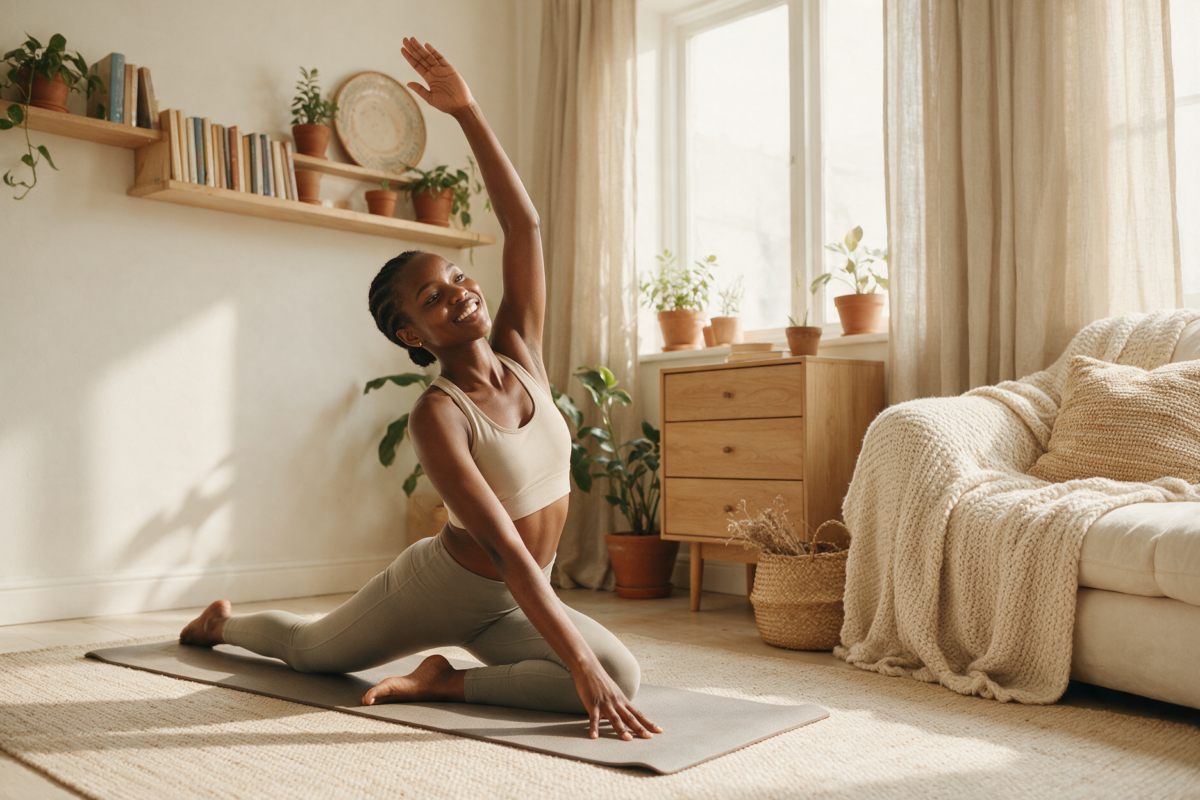
Yoga and stretching. Particularly beneficial for period cramps. Certain poses — child’s pose, supine twist, cat-cow — specifically release tension in the lower back and pelvis where menstrual pain concentrates. Yin yoga and restorative yoga are gentler options when energy is low.
Swimming. One of the most comfortable period exercises. Water provides resistance training with minimal impact, and the horizontal movement means pad leaks aren’t a concern — tampons or menstrual cups are the appropriate choice for swimming during your period.
Strength training. Can be continued as normal during your period. Some women actually find they have higher pain tolerance and energy on certain period days than others — day 2 or 3 is often more manageable than day 1. Listen to your body and modify intensity as needed.
High-intensity exercise (HIIT, intense running, team sports). Fine to continue if you feel up to it. Some women perform best in the mid-cycle follicular phase (after their period) when estrogen is rising, and find the luteal phase (before their period) and first days of the period slightly harder. This is normal hormonal variation, not a reason to stop training.
What to wear and use during exercise on your period
The right menstrual product makes active movement significantly more comfortable. For most forms of exercise, DadaCare Plus cotton tampons are the most practical choice — no external product to shift or chafe during movement, full internal absorption, and the freedom to wear whatever you’d normally train in. Choose the right absorbency for your flow: Regular for light-to-medium days, Super for heavier days.
For yoga, stretching, or lower-intensity sessions where you prefer not to use a tampon, a well-fitted pad with secure adhesion and side leak guards works well. DadaCare Plus pads use a 6D contoured shape and multi-strip adhesive that stays in place even during active movement.
When to actually rest
Some days your body genuinely needs rest — and a period day is a legitimate reason to take it. If you’re experiencing unusual fatigue, dizziness, very heavy flow, or severe pain that makes movement uncomfortable, rest is the right call. Don’t push through pain that feels wrong or symptoms that are unusually severe. But routine period discomfort — manageable cramps, tiredness, bloating — responds well to gentle movement rather than full rest.
The goal isn’t to ignore your body during your period. It’s to stop treating menstruation as an automatic reason to pause your life. Your body is capable of movement during your period. In most cases, it benefits from it. Lace up, choose the right protection — DadaCare Plus cotton tampons for active days — and keep moving.